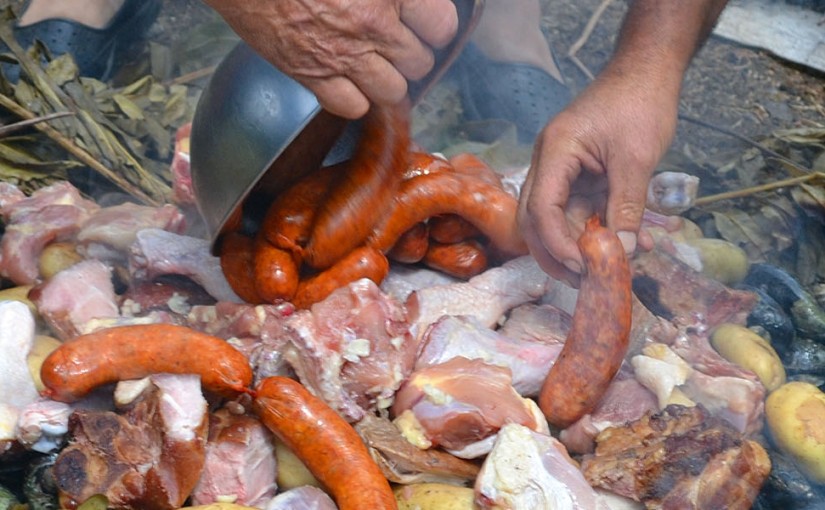
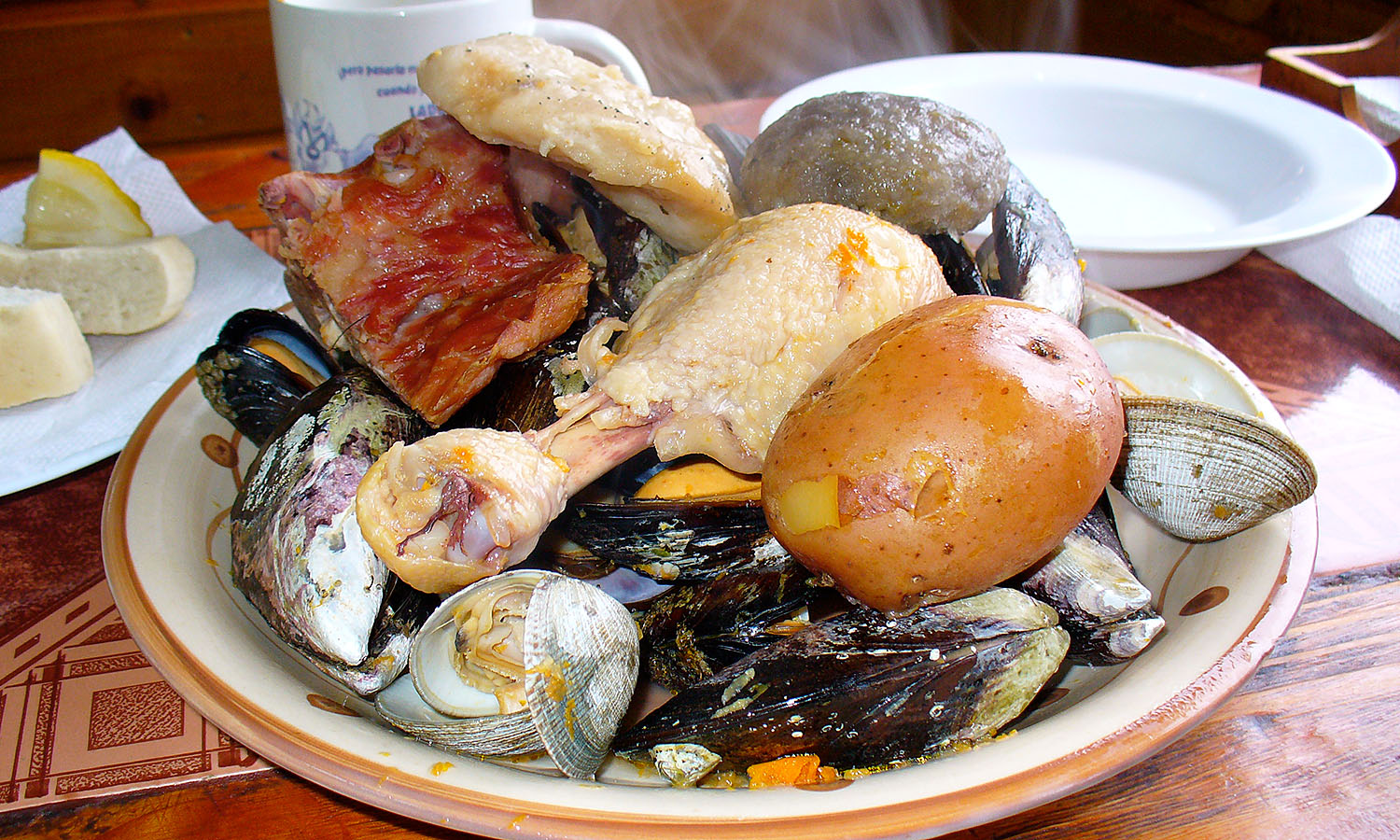
Tear a chunk of pork from the bone, crack open a clam, chow down on a dumpling and follow up with a mouthful of sausage. Next in line are mussels, chicken, barnacles and spuds.
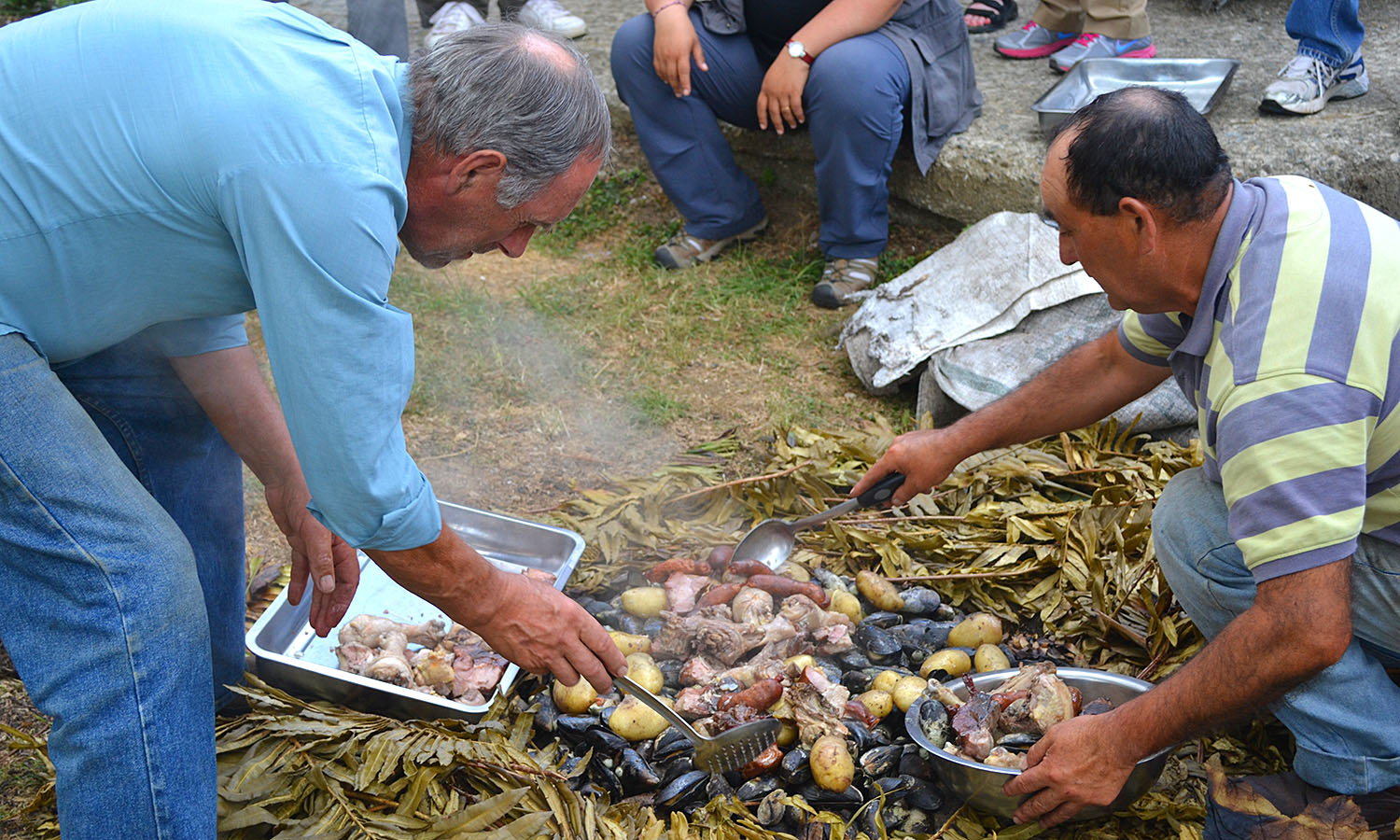
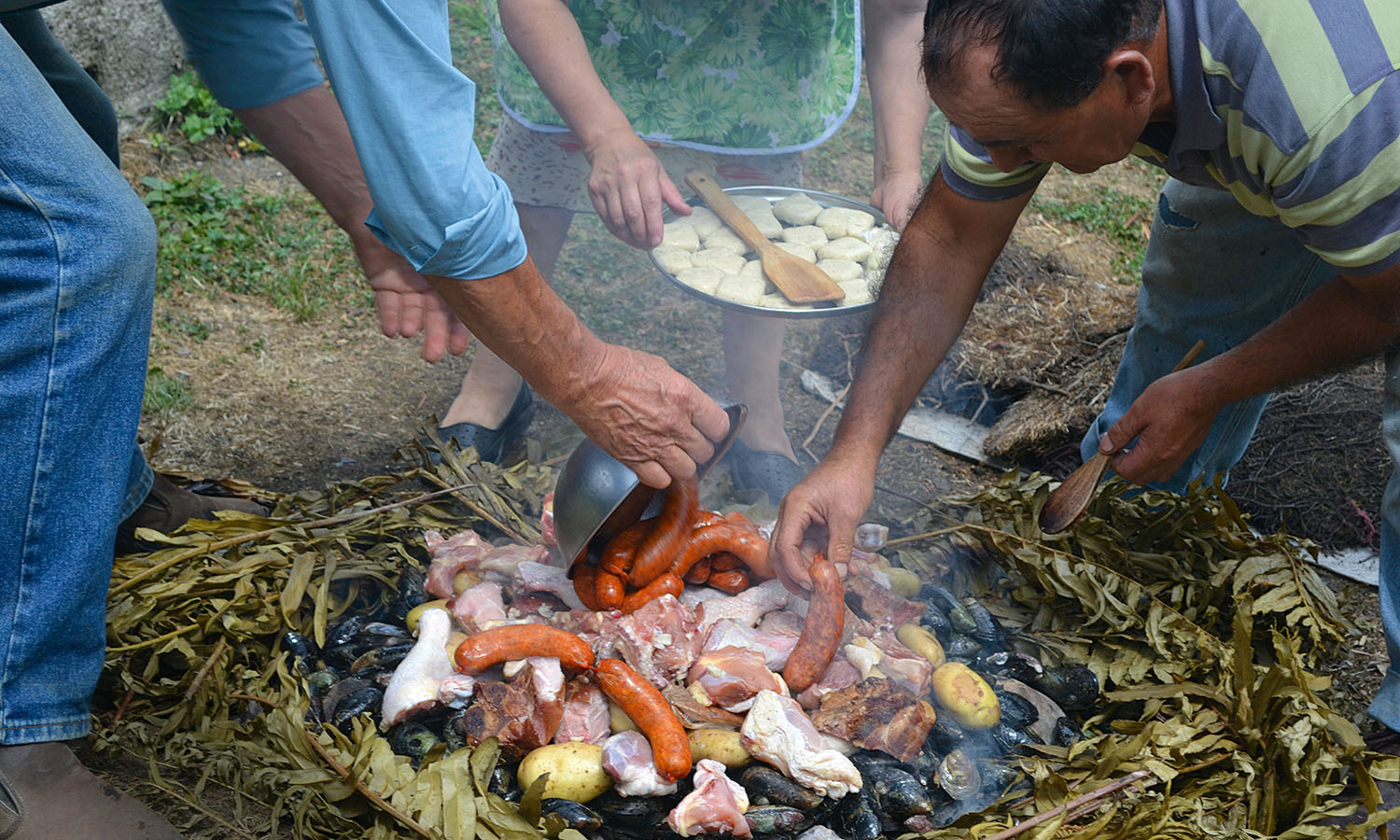
Hailing from the Chiloé Archipelago, Chile’s curanto is a meat-lover’s feast. Traditionally the bounty is bundled over hot rocks, wrapped in nalca (wild rhubarb) leaves and left for a couple of hours to bake.
The resulting repast, curanto en hoyo, is served on special occasions, when dozens of hungry mouths plunder the mountain of meats.
Head to Chiloé Island to sample the purist’s dish, or for a taste that’s widely available on the mainland, order curanto en olla. Cooked in a pot, the dish combines juicy seafood with a fragrant broth.
Dig in and wash it all down with a glass of local chardonnay.
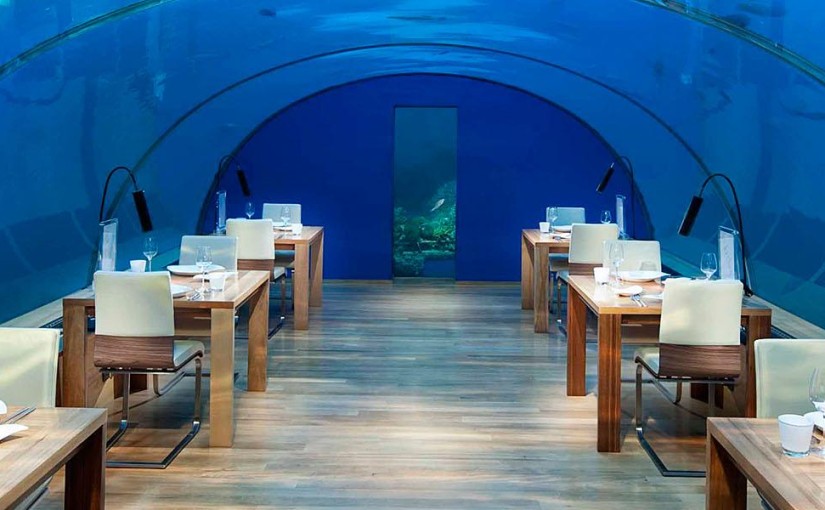
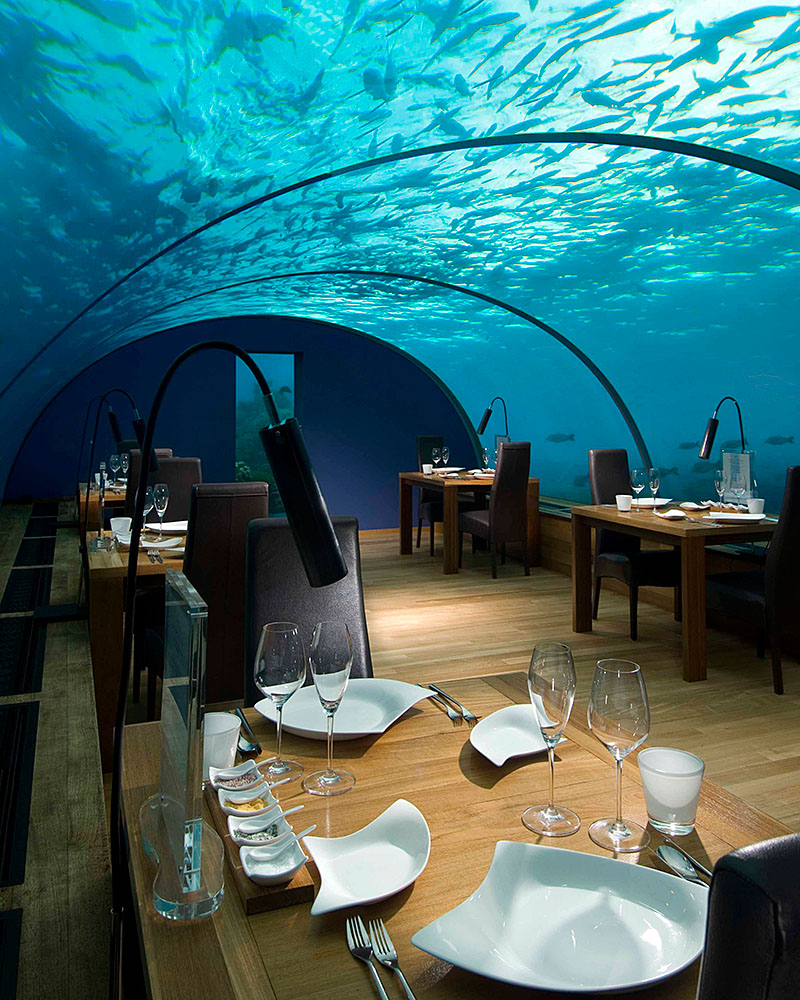
Take dining to a whole new level at Ithaa Undersea Restaurant, the world’s first all-glass underwater restaurant. One of 12 restaurants at the Conrad Maldives Rangali Island resort, it’s located five metres below the surface and has panoramic views of the surrounding coral gardens.
Wrap up (the aquatic tunnel can get chilly) and munch through the tasting menu while schools of clownfish dart just beyond the glass. Dine at night on the six-course prix fixe menu featuring contemporary European cuisine and watch as bigger fish and predators arrive. Just try to ignore that Patagonian toothfish eyeing you off – you’re probably eating his cousin.
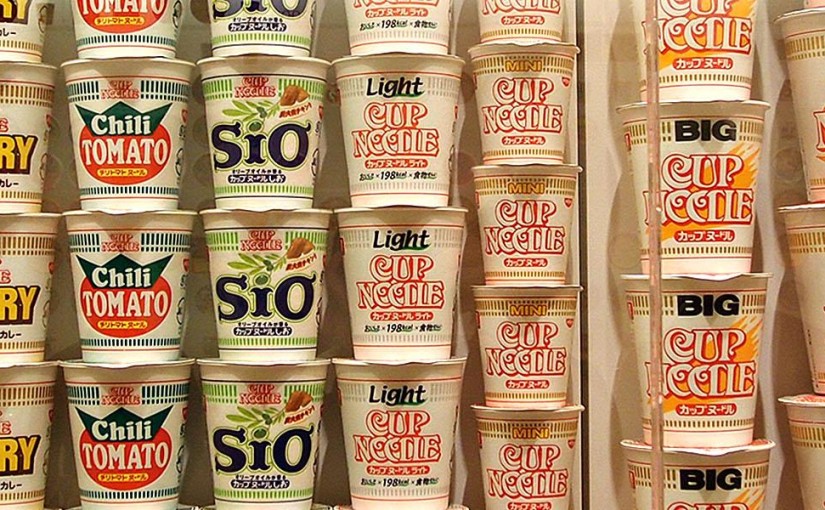
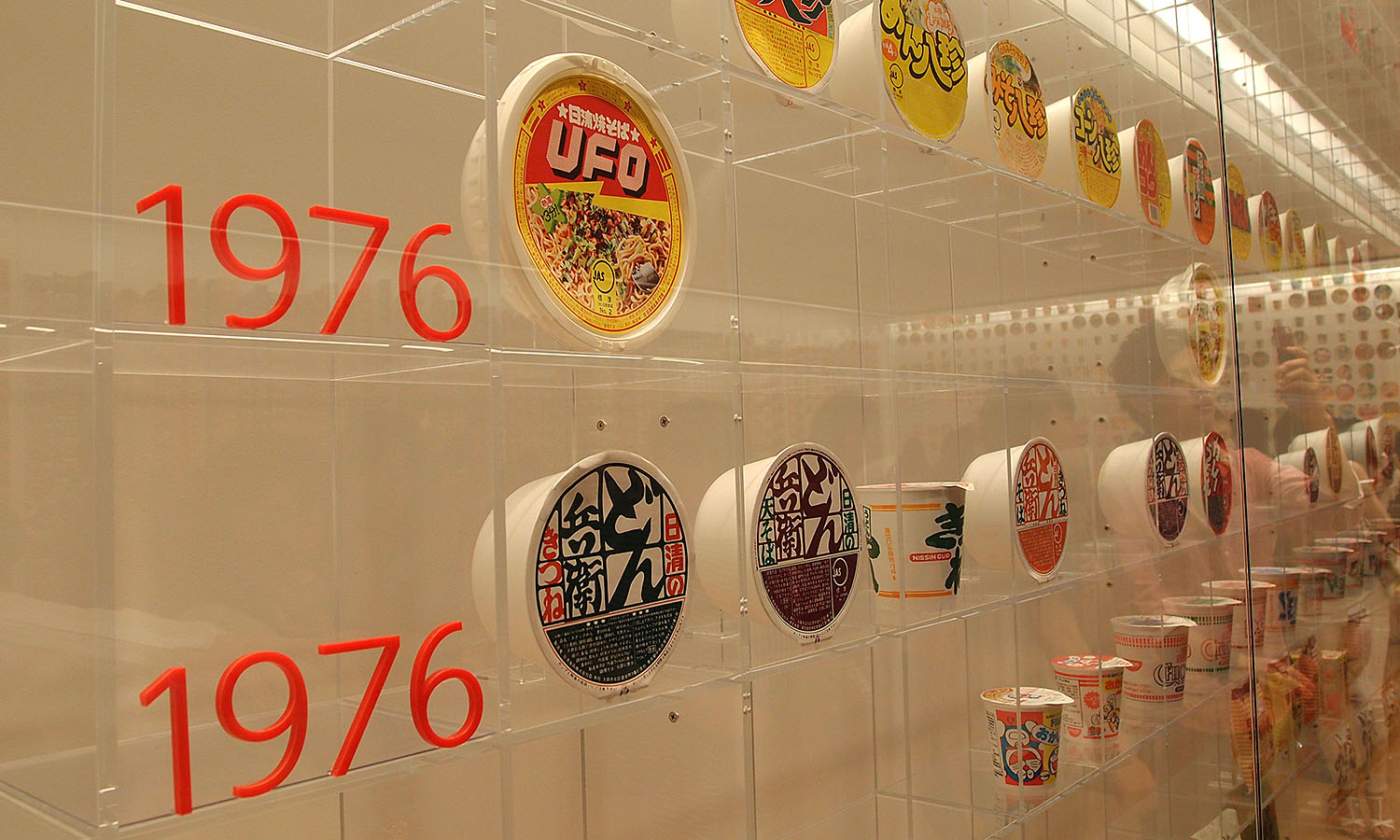
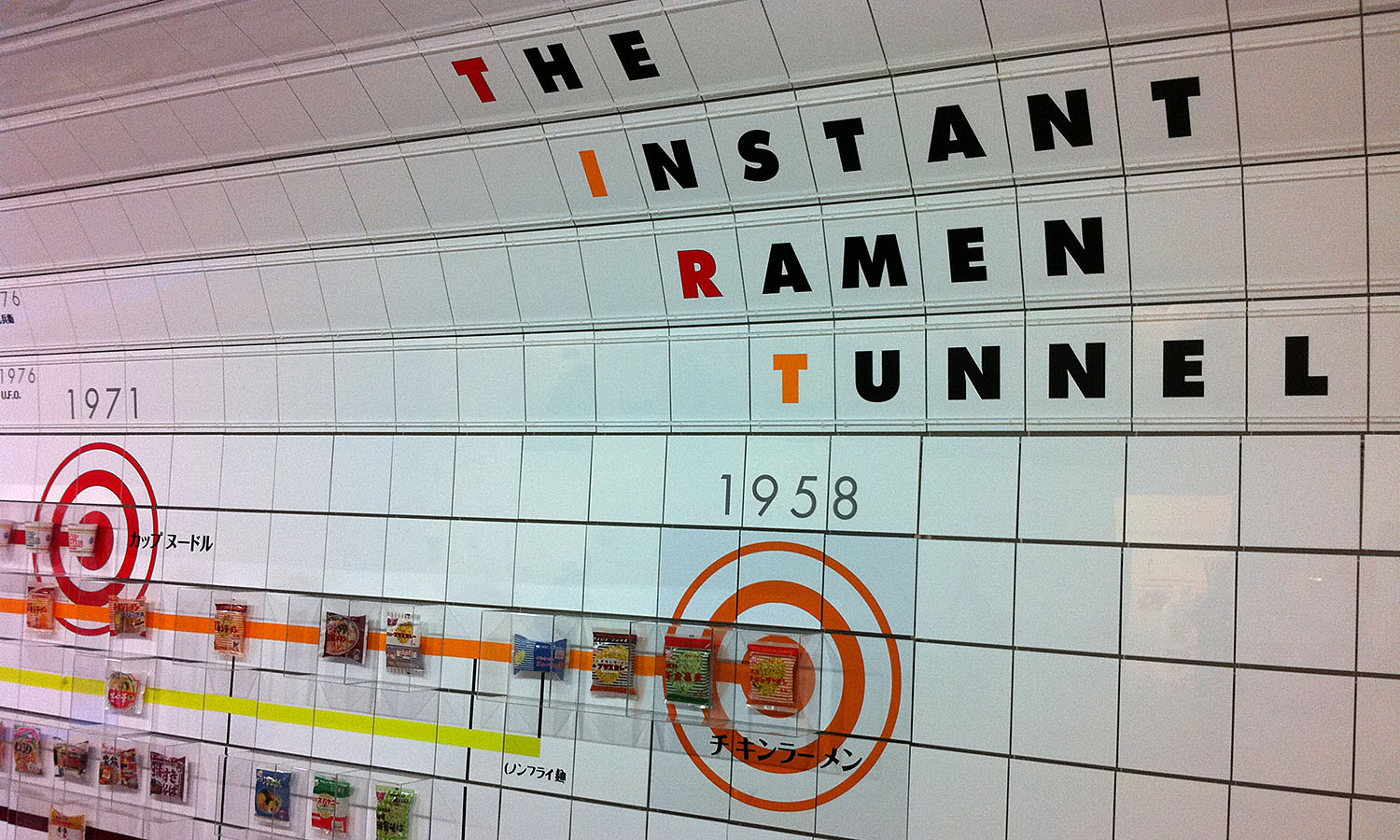
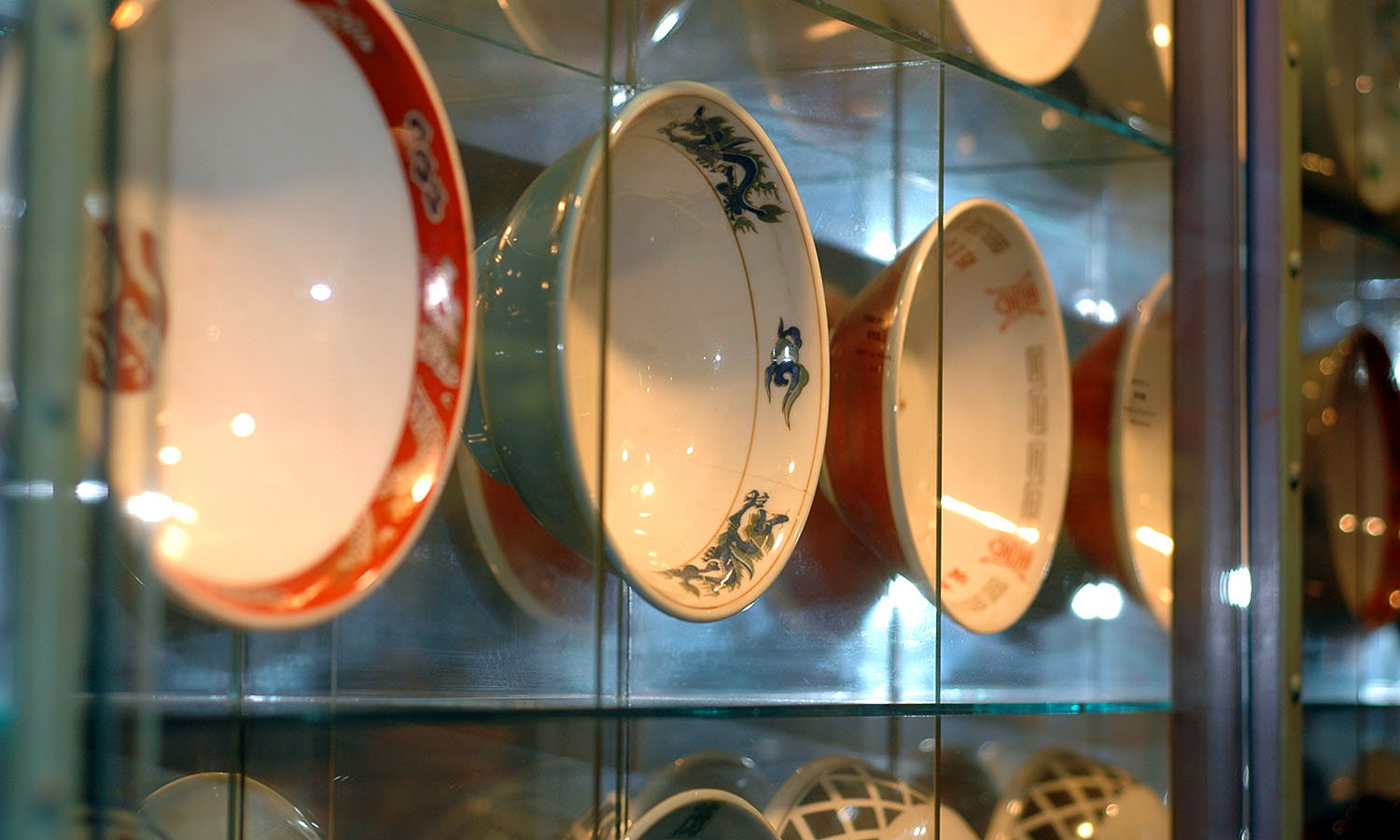
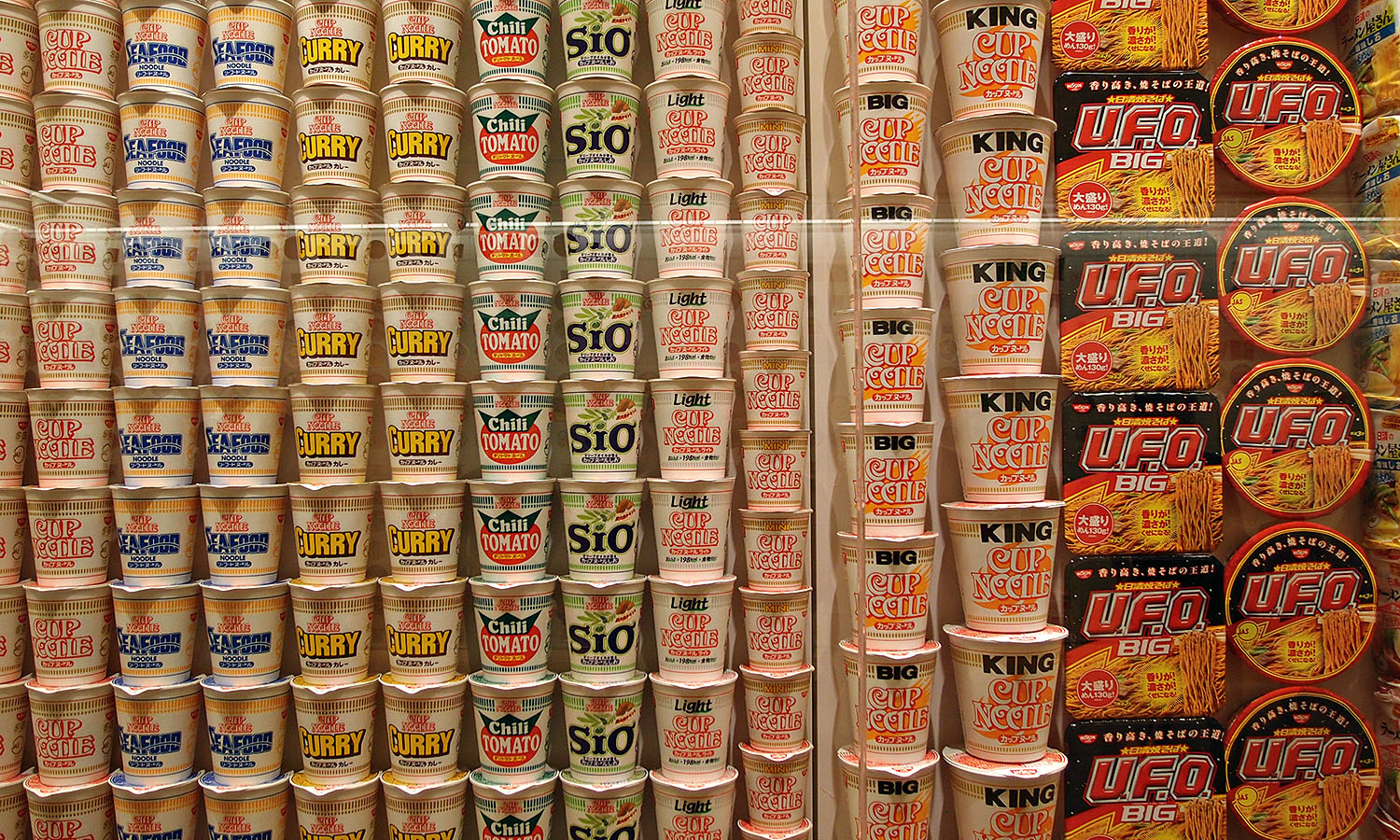
Get ready to redefine the phrase ‘experience your food’ at Shin-Yokohama Ramen Museum, a noodle-based theme park. Honouring one of Japan’s national dishes – it was, in fact, appropriated from a Chinese meal – this museum boasts rides, shops, tastings and historical information completely devoted to the soupy goodness that is ramen.
Take a stroll through the refashioned dagashi-ya (old-fashioned sweet shops) or challenge a friend on the 30-metre slot-car racetrack. While you’re there, be sure to get slurping, since a whole swathe of varieties is being dished up.
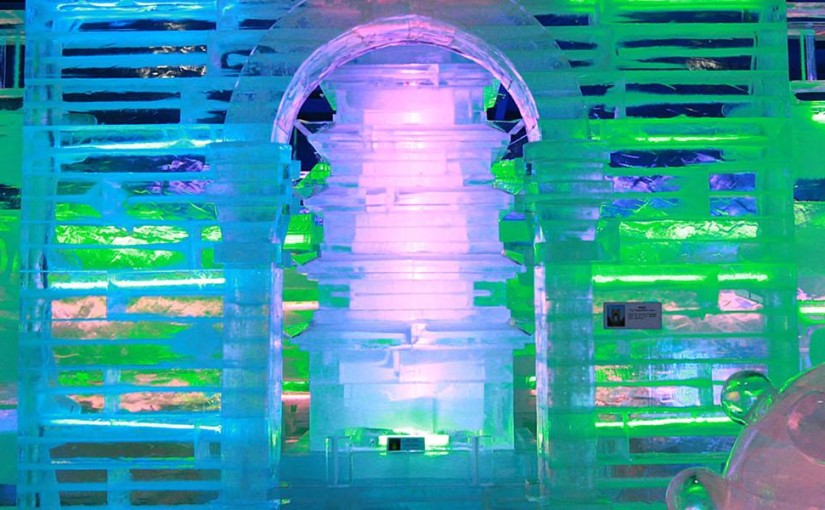
To celebrate the beauty of winter and Gangwon-do Province’s abundance of mountain trout, tonnes of the plump silver swimmers are released into the river during January to be captured and cooked at the Hwacheon Sancheoneo Ice Festival. Dubbed one of the “seven wonders of winter” by Lonely Planet, this South Korean festival lures hundreds of thousands of visitors each year with sledding, snow slides, ice hockey and fish, glorious fish.
If wielding a rod isn’t thrilling enough, wade into a frigid pond wearing a T-shirt and shorts and test your skills on a barehanded hunt. Once you’ve snagged the Queen of the Valley, swap your catch with a vendor serving sashimi or trout that’s been cleaned and cooked. Devour with plenty of warming soju (rice liquor).
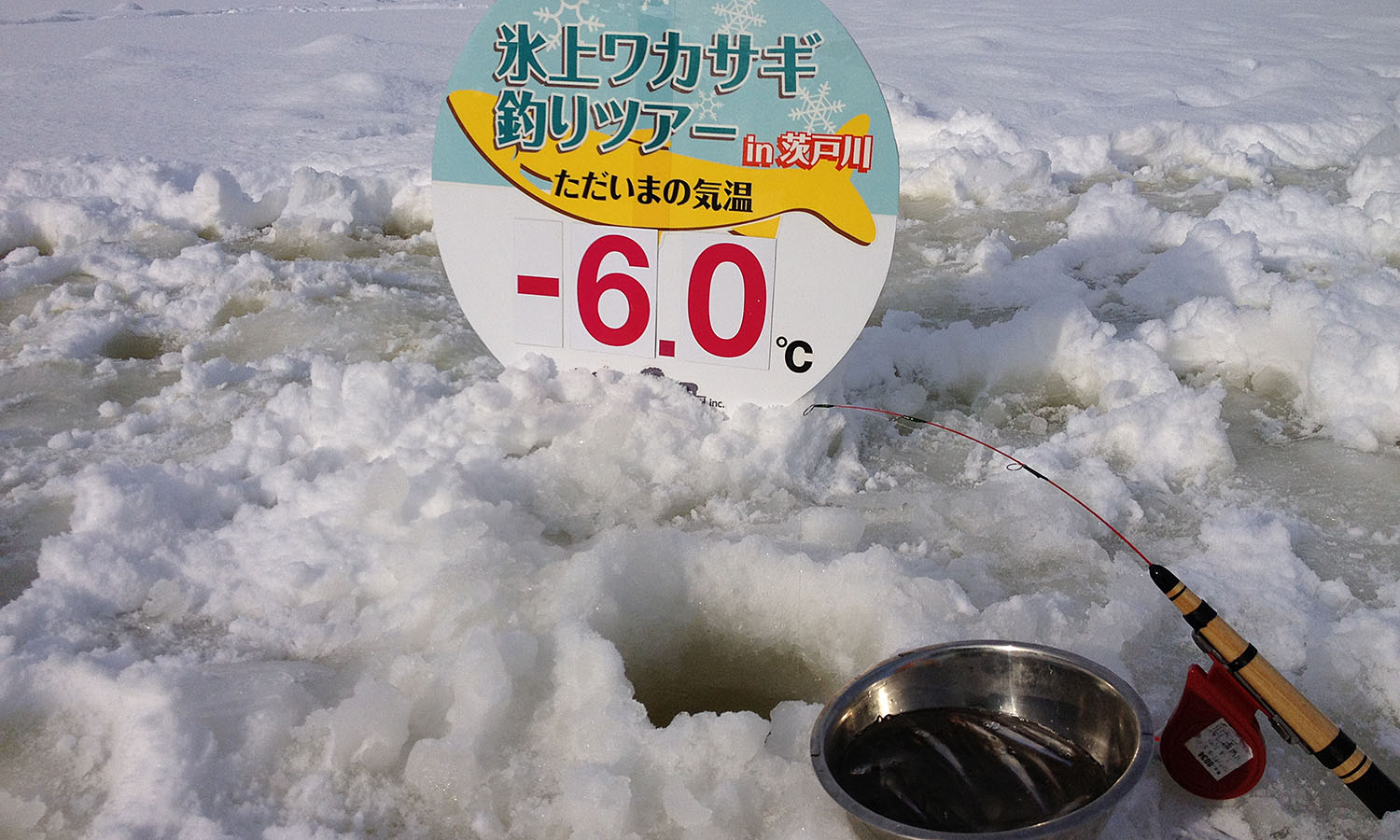
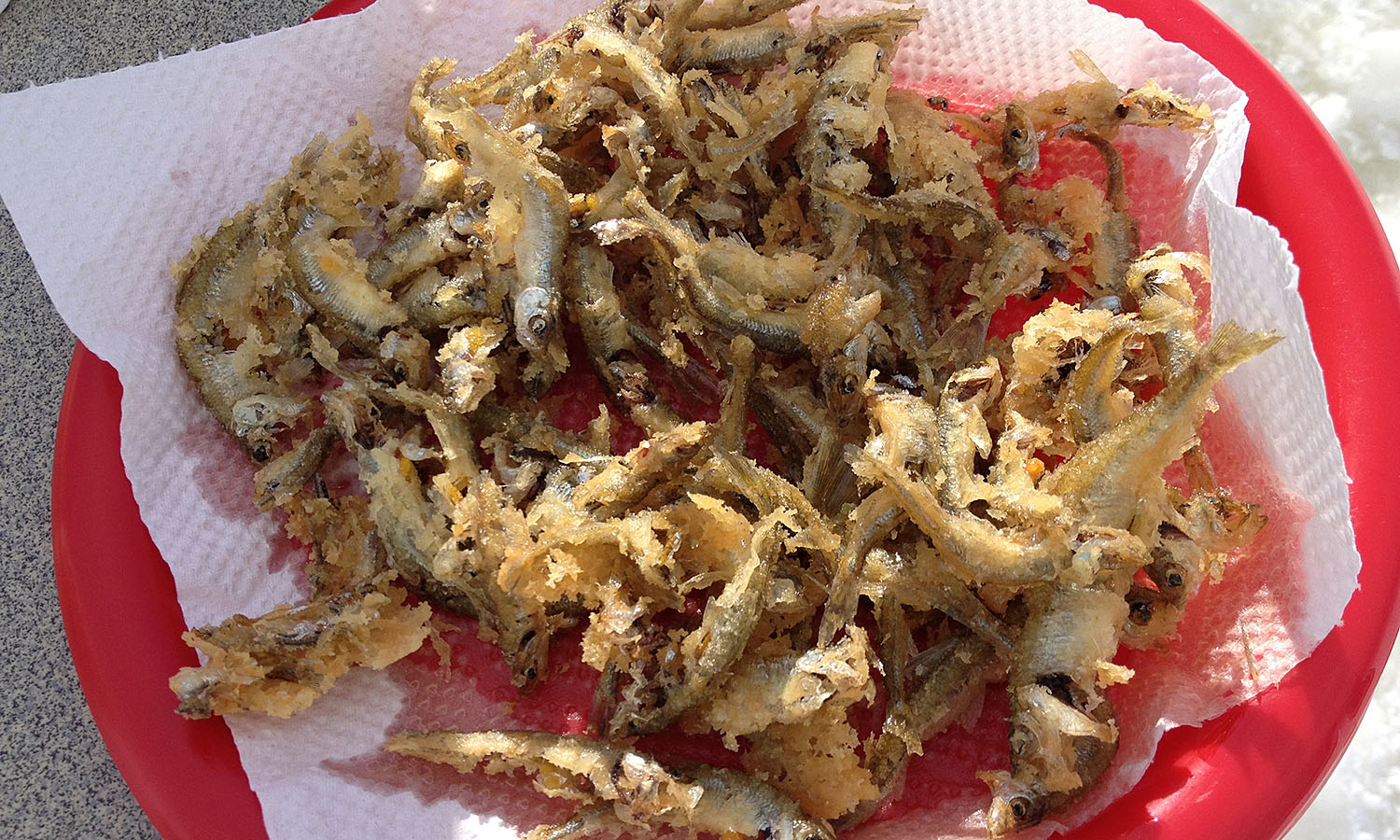
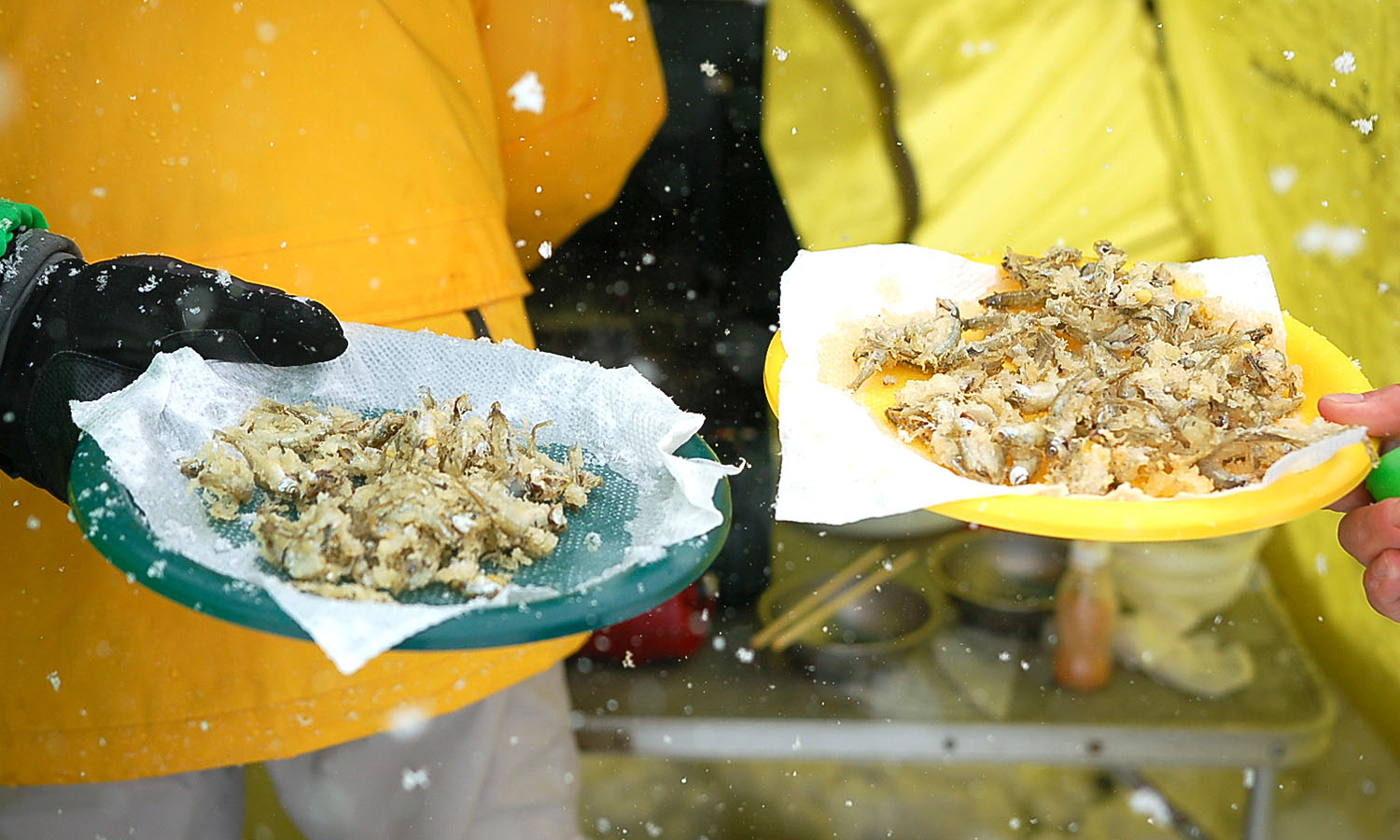
Hunting for lunch on a frozen river sounds like a macho way to fill your belly. Not in Japan, where ice-fishing oozes cuteness and culminates in bowls full of crunchy wakasagi (tempura smelt fish). Colourful tents rise from Sapporo’s solid Barato River, some with portable heaters offering respite from the cold (find one and make friends with the owners).
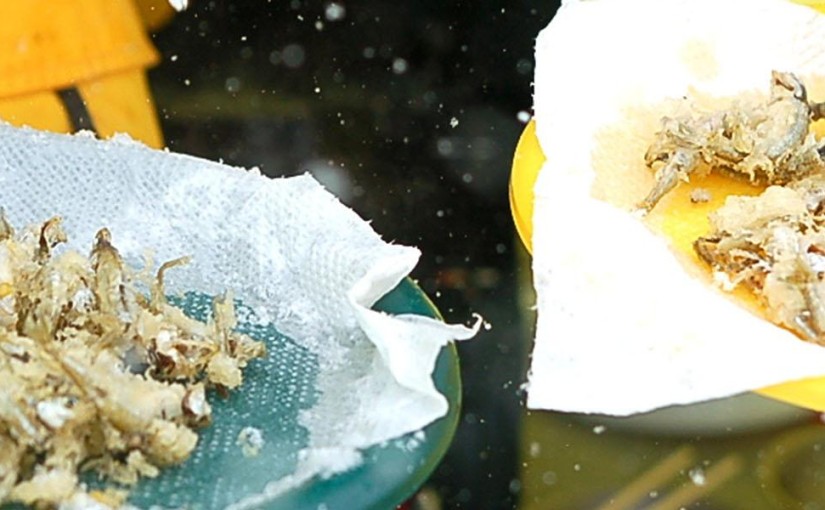
Grab a teeny-tiny rod, settle on a low-rise stool and dangle your line in a hole carved in the very thick crust. Once you’ve reeled in a feast, dip your snacks in batter, plunge them into a bubbling pot of oil and give them their marching orders straight to your gob.
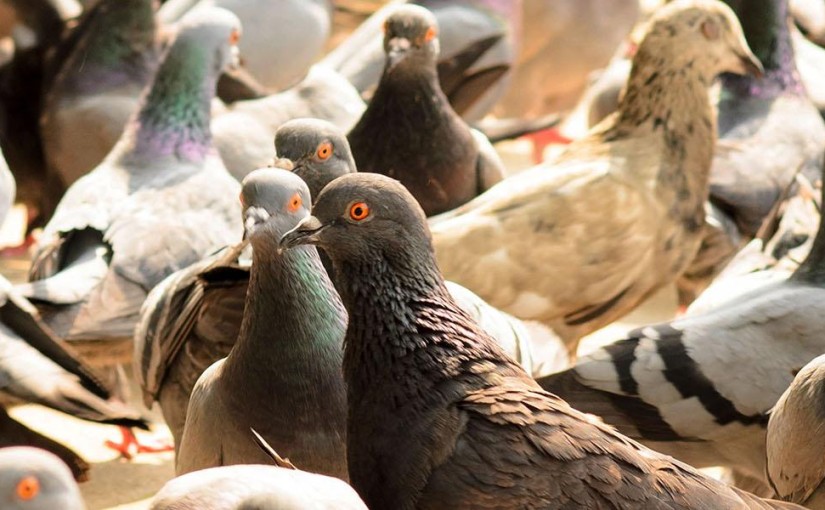
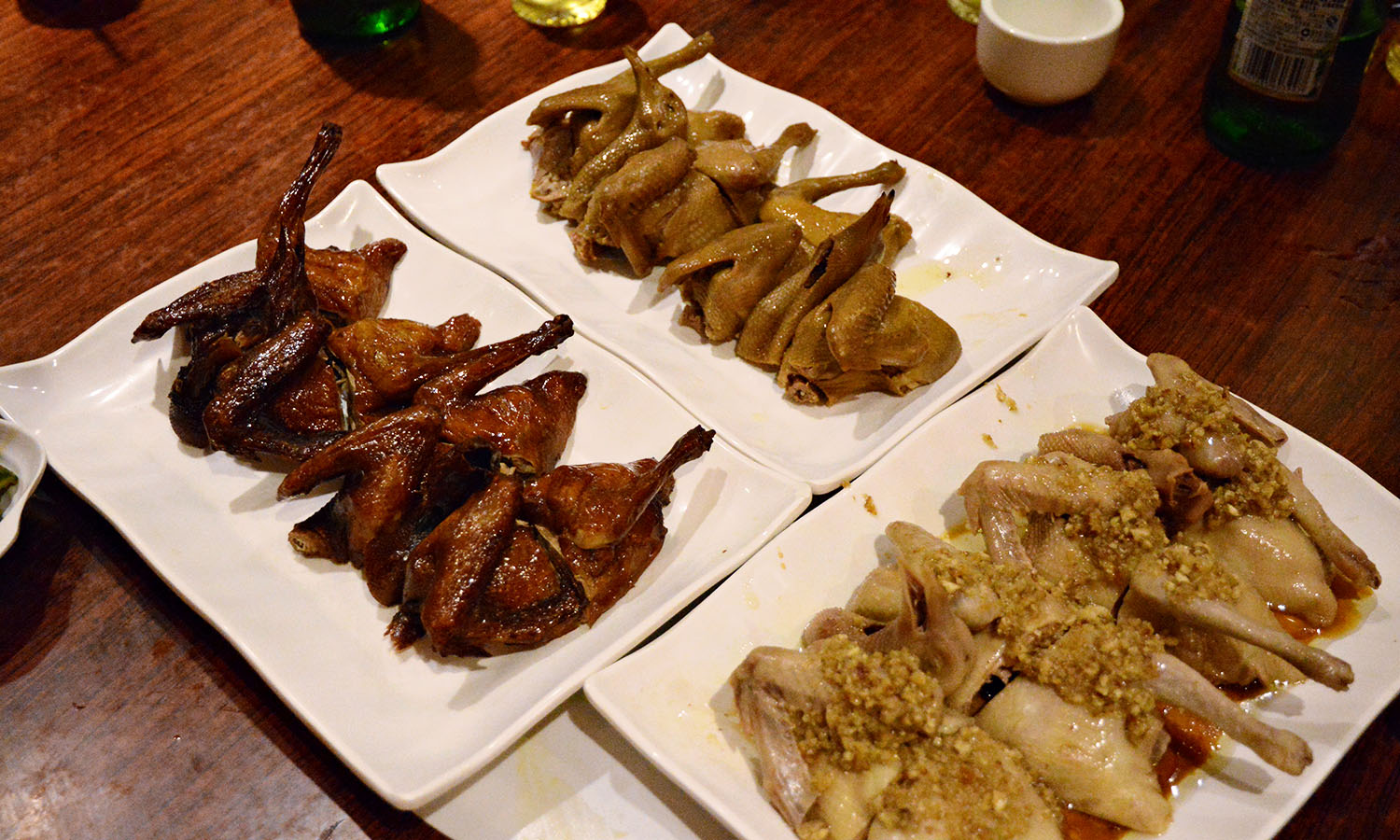
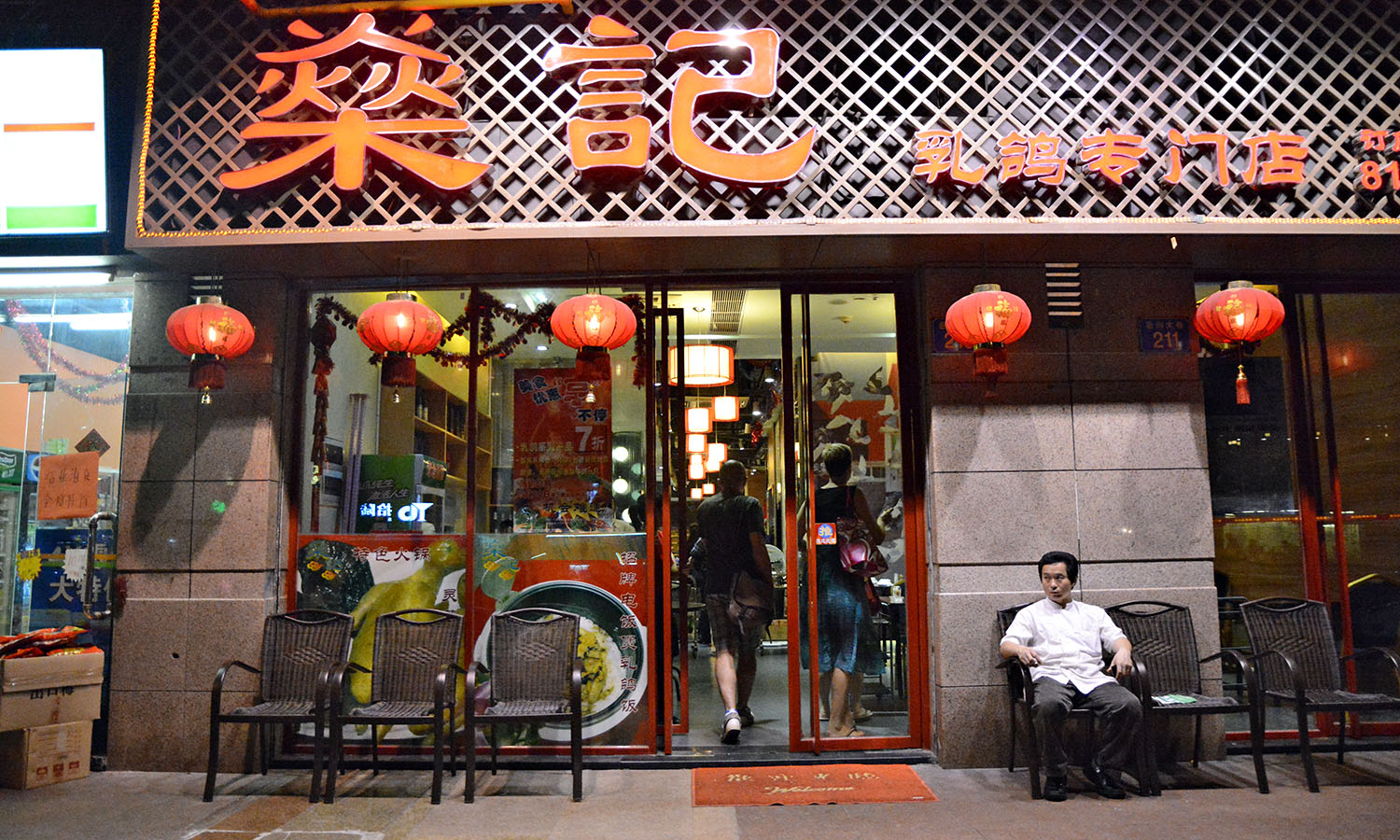
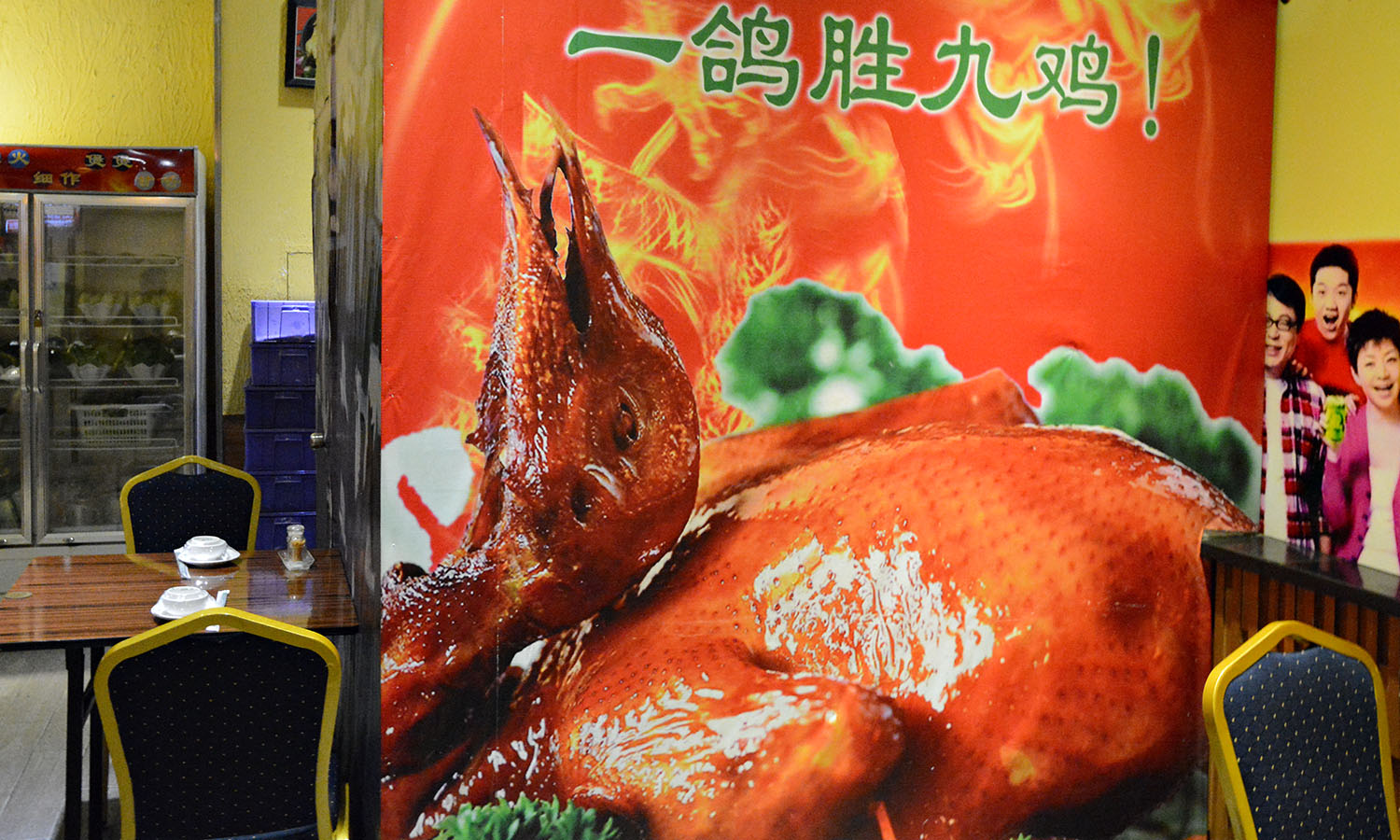
Hate pigeons? You’re not alone. Shooing them away from public squares may give you a sense of satisfaction, but the Chinese enjoy an even more permanent way of banishing these pesky creatures – they eat them. Visit markets around Guangzhou and you’ll see birds plucked and preened for sale, but for some of the city’s best pigeon head to Shen Ji restaurant, which sells up to 500 birds a day.
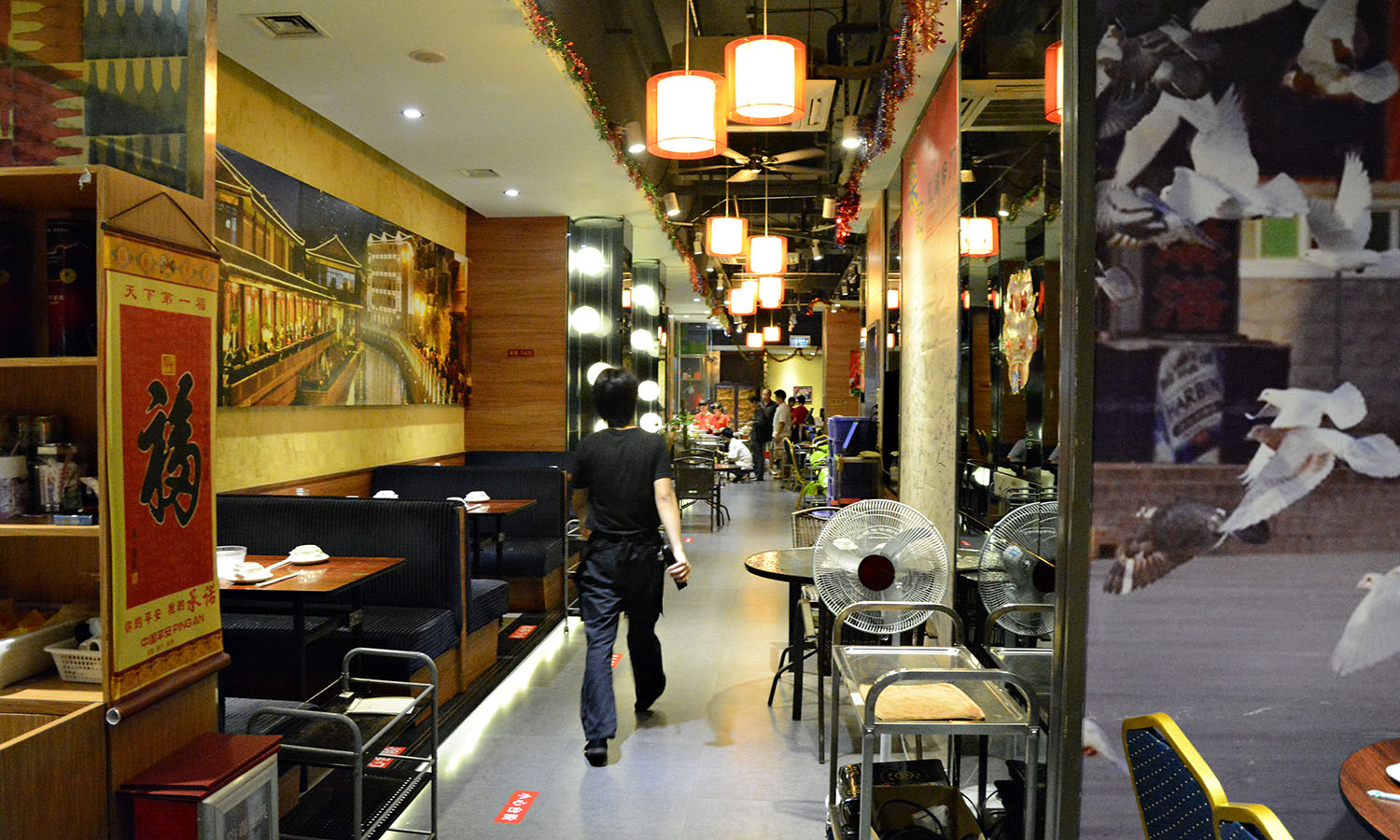
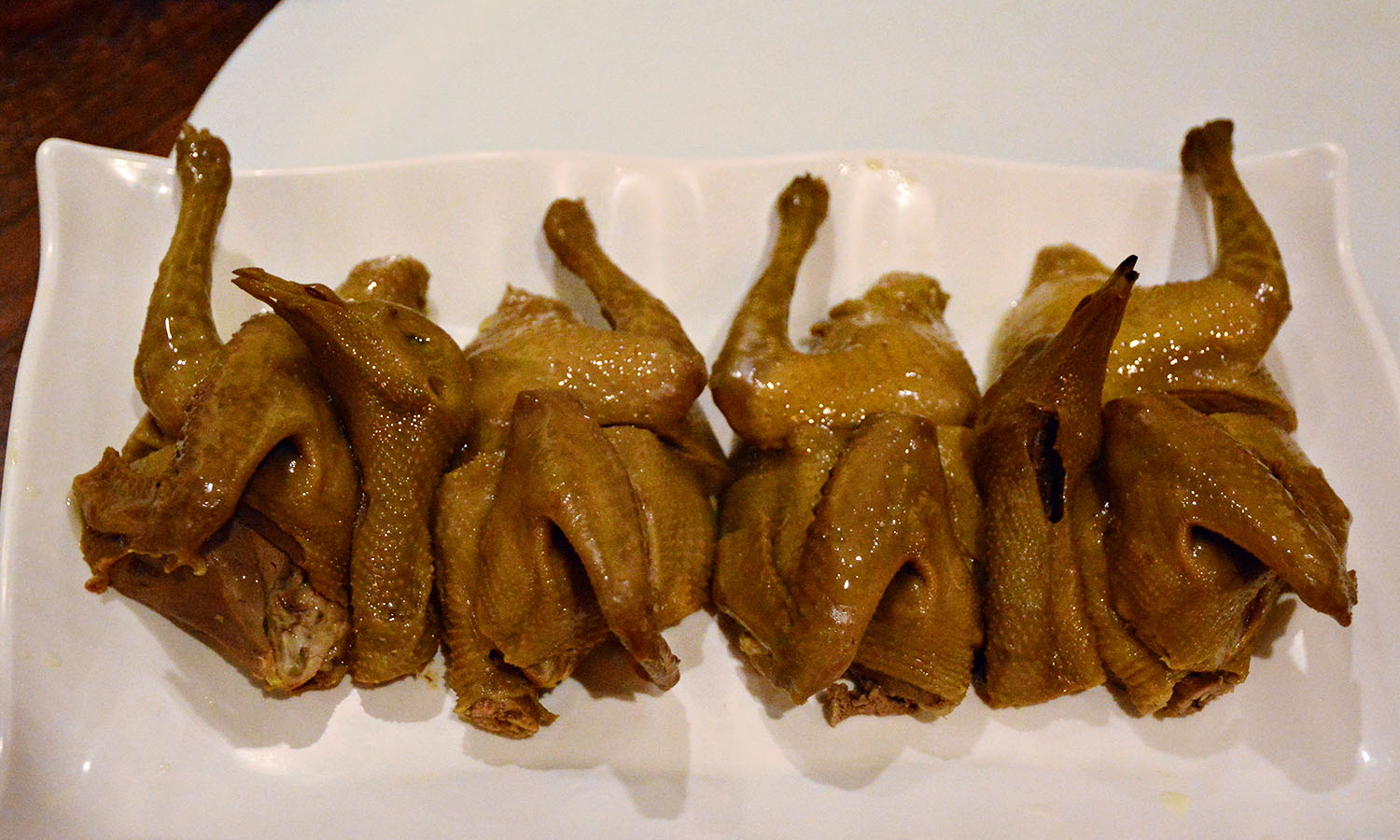
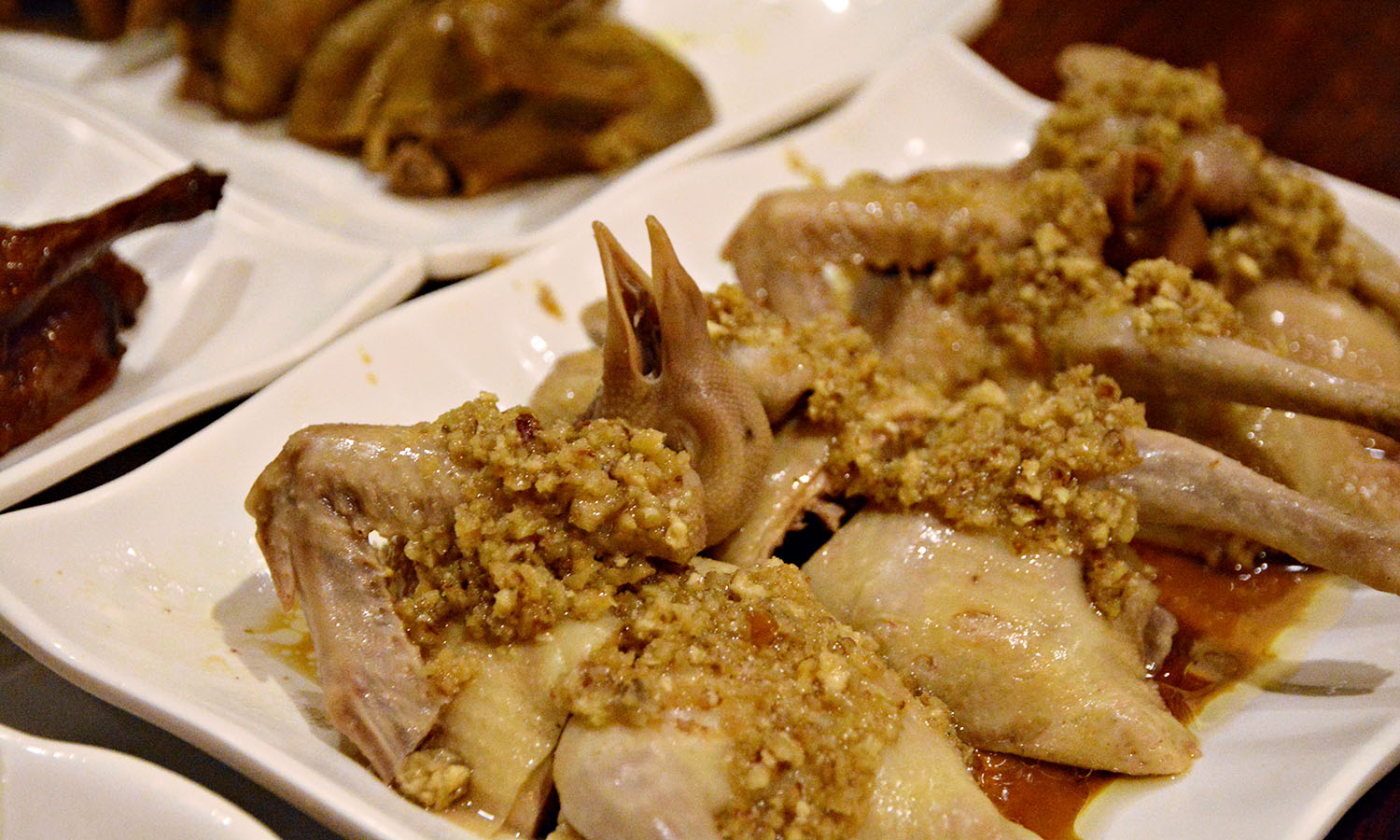
Pass the painted flock at the entrance and settle into the back room with mountains etched on the walls and framed photos of cooked birds gazing at diners with glazed eyes. Choose from an array of flavoured pigeons, including tea and ginger, and squab persevered in bean curd. However, it’s the roasted variety – dished up hot with crispy skin and tender meat – that’s the clear winner. Each bird arrives with its head cocked between a body cleaved in two, ready to be set upon by chopsticks or fingers. Order yourself side of crunchy cucumber cooked with fragrant sesame oil, garlic and chilli and wash it all down with a beer. Revenge has never tasted so surprisingly sweet.
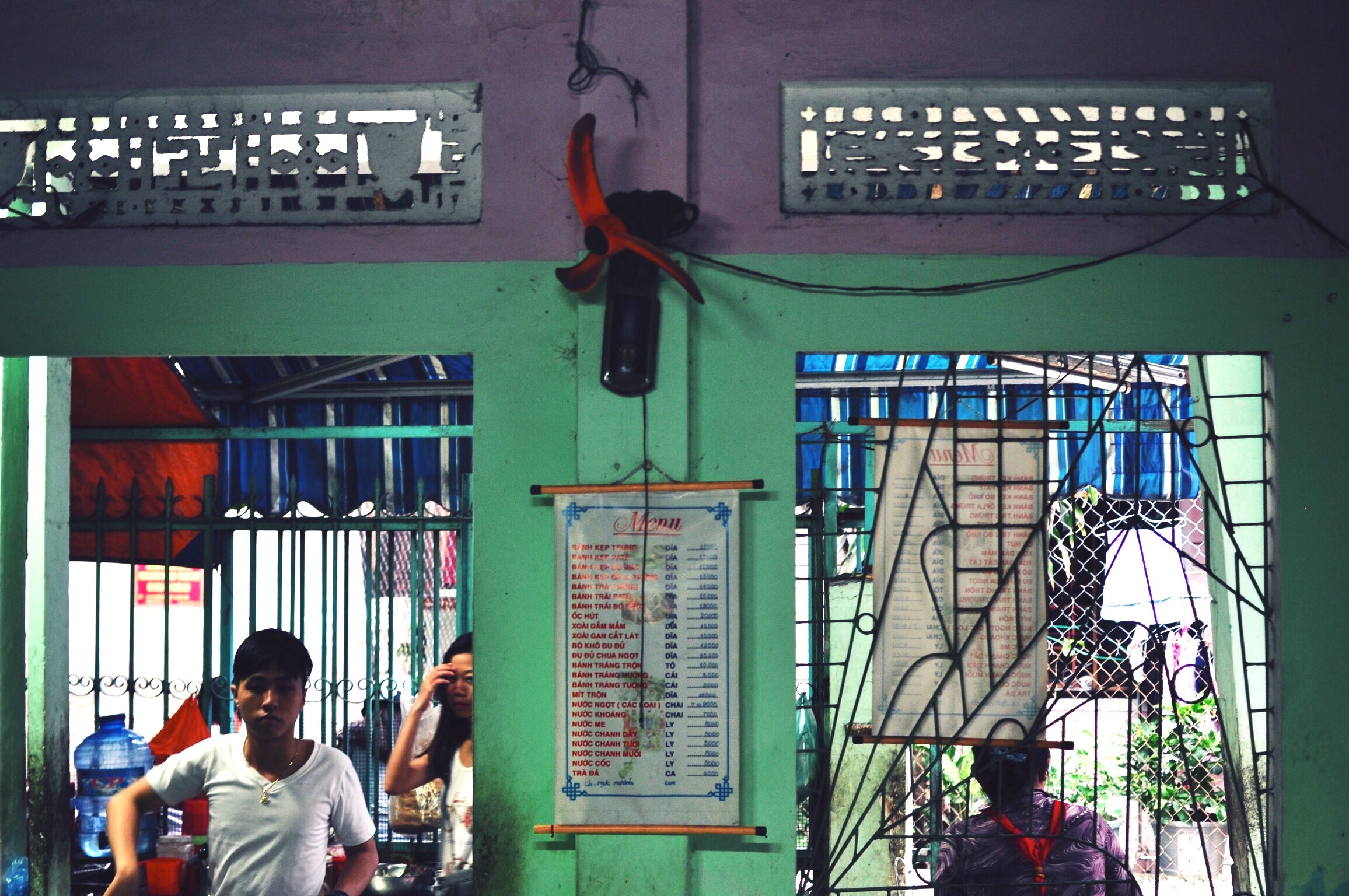
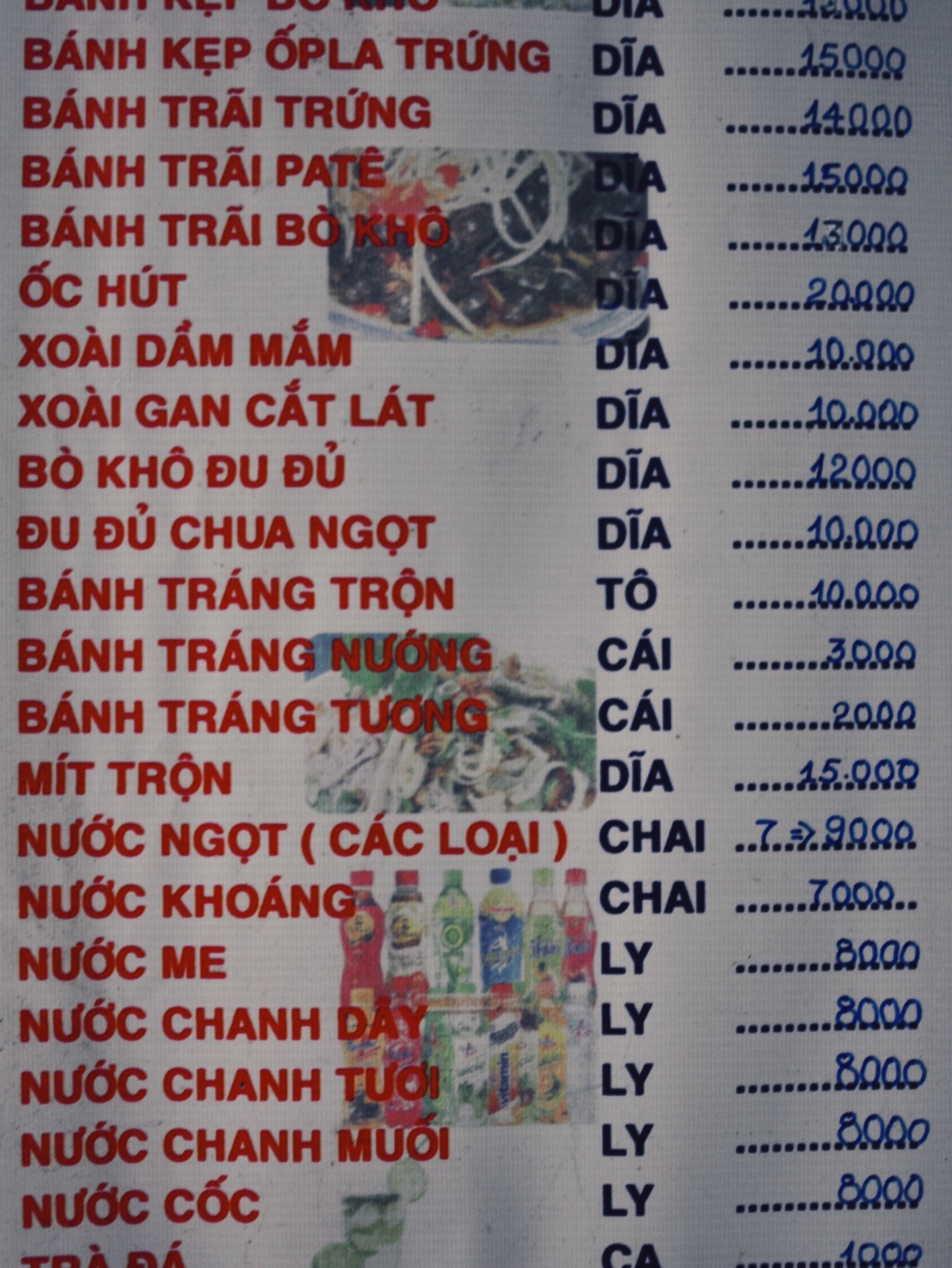
Forget pepperoni and mozzarella. On October 9, International Beer and Pizza Day, we’re raising a frosty glass of bia hơi and tearing into Vietnam’s most underrated street snack – bánh tráng nướng – at a scruffy little student haunt called K298 in Da Nang.
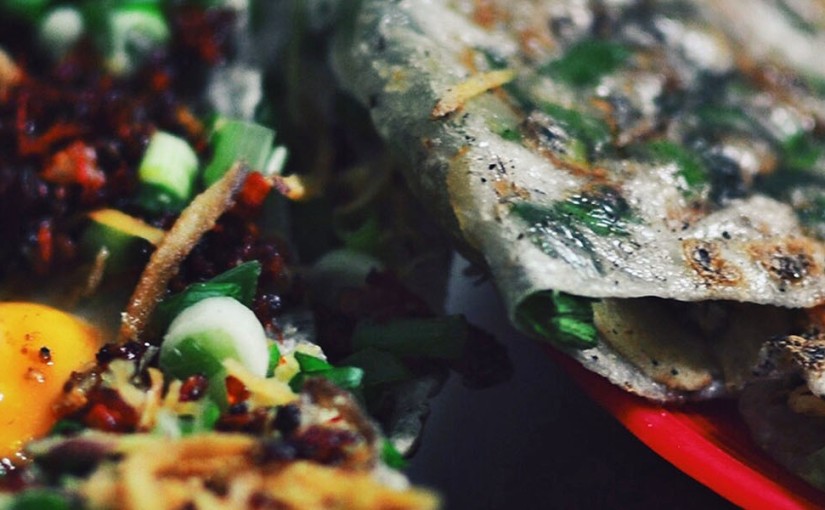
You won’t find wood-fired ovens or sourdough crusts here. Instead, Vietnam’s answer to pizza starts with something beautifully simple: a sheet of rice paper (bánh tráng) laid across a sizzling metal grill until it turns golden and brittle. Then comes the chaos – quail eggs cracked and scrambled on top, dollops of chilli sauce, shredded dried beef (khô bò), spring onions, mayonnaise, sausage, garlic, herbs, and whatever else the chef feels like throwing on that day. It’s street-food roulette, and half the fun is not entirely knowing what you just ordered.
Each disc is crisp and smoky, a riot of textures and flavours that veer between spicy, salty, sweet and umami with every bite. It’s messy, addictive, and so light you’ll be ordering another before you’ve even wiped the sauce off your chin.
Of course, you can’t do International Beer and Pizza Day properly without beer – and in Vietnam, that means bia hơi: draft lager brewed daily, delivered by motorbike in steel kegs, and poured fresh into tiny glasses for about the price of a packet of gum. It’s low in alcohol, a little foamy, and dangerously easy to drink, which is just as well, because the locals keep topping you up before you can say no.
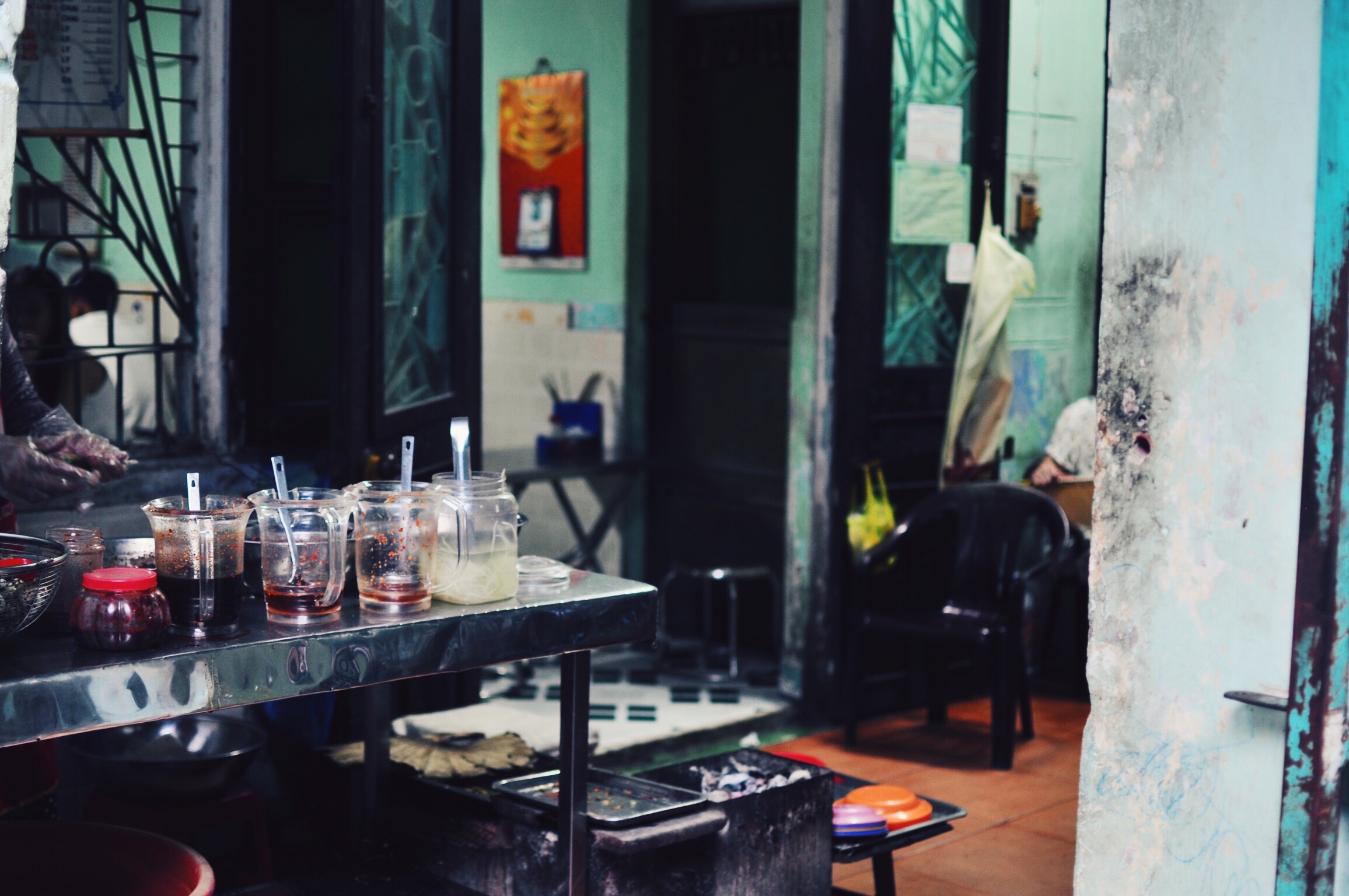
The setting? Well, let’s just say Michelin inspectors aren’t exactly queueing up outside. K298 is a hole-in-the-wall with faded pastel walls and mismatched plastic stools, the kind of place where conversations bounce off the tiles and the smell of grilling rice paper hangs heavy in the air. Students crowd around tables, shouting orders over the clatter of spatulas, and everyone seems to be laughing. It’s loud, chaotic, utterly unpretentious and completely perfect.
So this International Beer and Pizza Day, skip the delivery app and raise a glass of cheap, frosty bia hơi to Vietnam’s crunchy, chaotic, wonderfully improvised take on pizza.
Because sometimes the best slice isn’t served from a pizzeria, it’s grilled over coals on a street corner, with a side of laughter and a dangerously refillable glass.
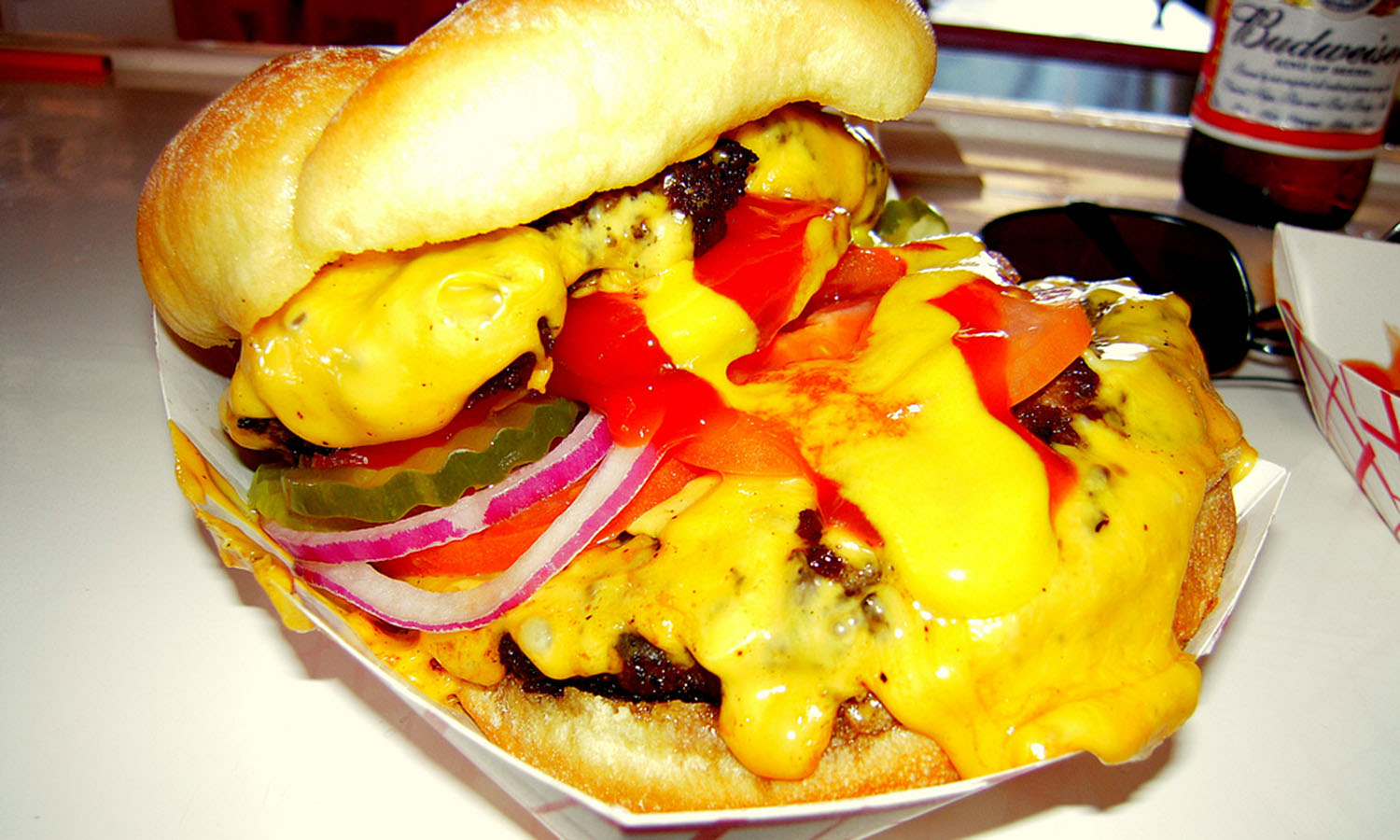
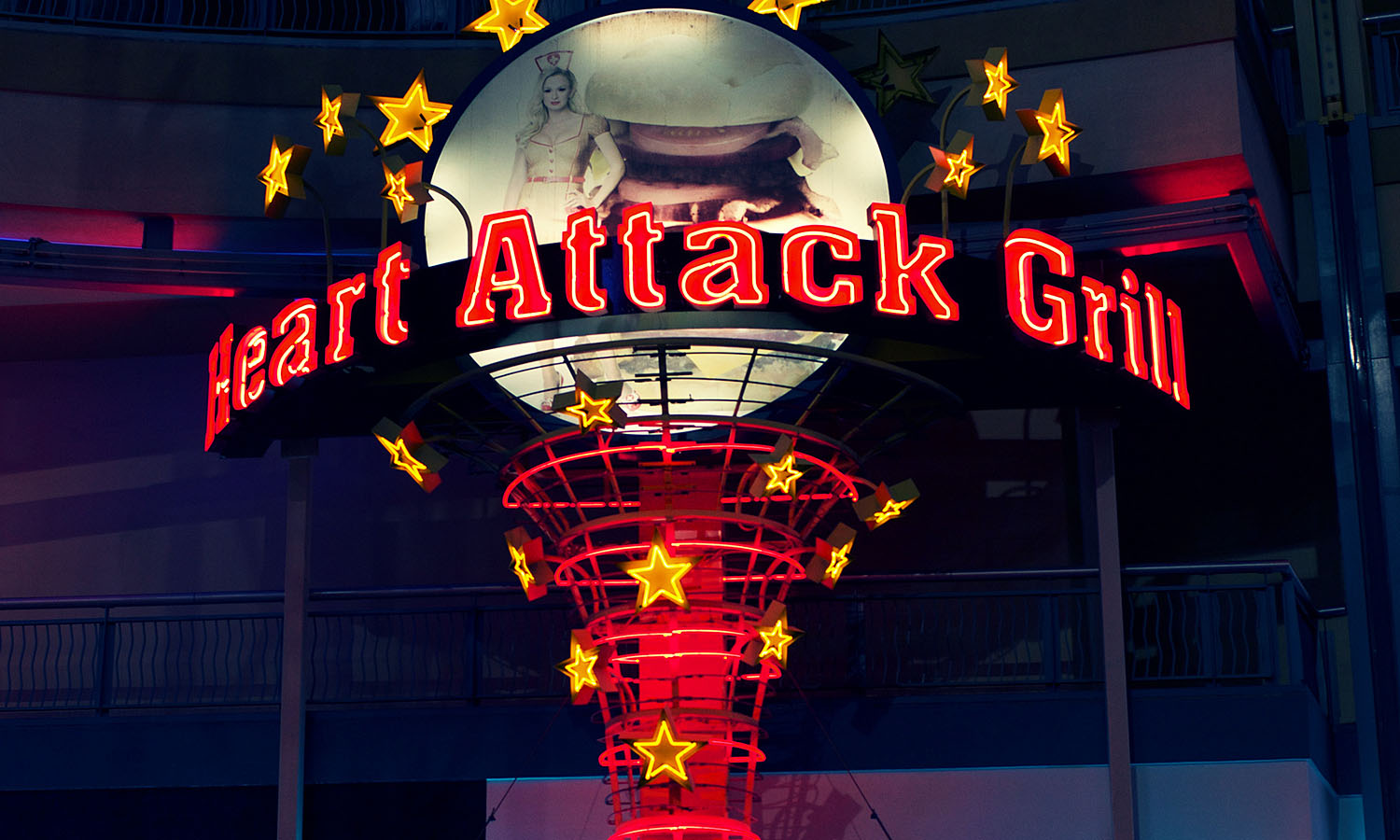
Where else but Las Vegas – city of sin and excess – would you find an eating den that is such an unashamed peddler of super-sized fast food? The Heart Attack Grill is the baron of big-bastard burgers: obscenely humongous grease towers, dripping with almost 10,000 calories. You are considered a patient here, not a customer, and the wait staff (nurses) will take you through a menu that defies all sense of dietary restraint.
Choose between the Quadruple Bypass Burger and, because you’re a serious glutton, the Octuple Bypass Burger, and see if you can stomach up to 1.8 kilograms of beef. Grab a side of Flatliner Fries (cooked in pure lard) and wash it all down with a Butterfat Milkshake. Diners who weigh more than 350 pounds (159 kilograms) get unlimited free food. Finish the Quadruple Bypass Burger and you’ll receive a free ride to your car in a wheelchair, which is handy because heart attacks aren’t uncommon here.
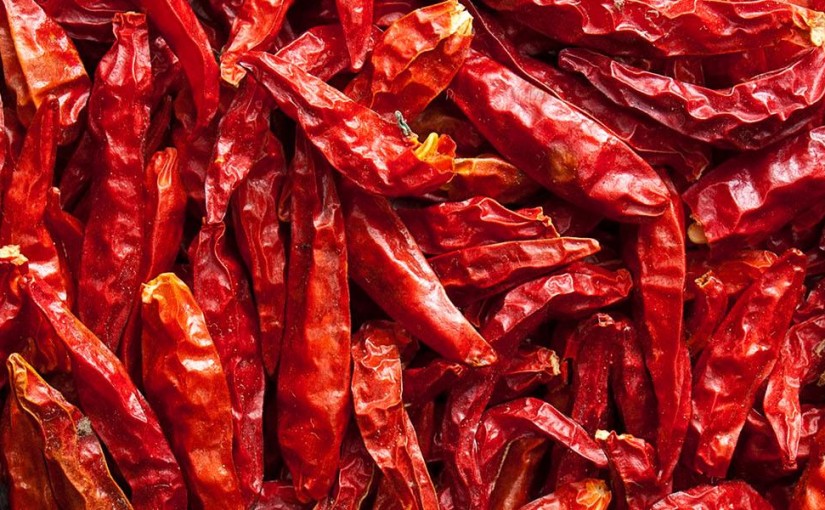
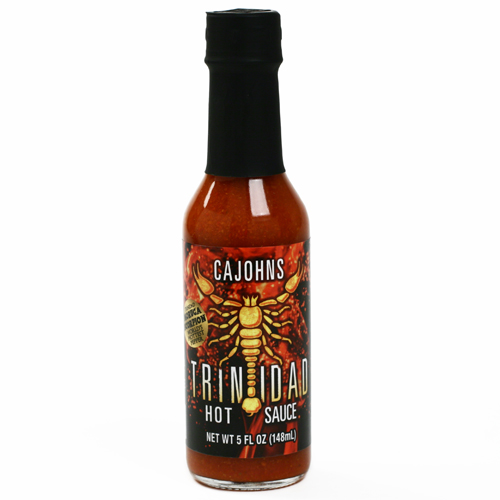
As any gastronome worth their salt (and pepper) knows, the best bit about any fine dining experience is when you voluntarily eat something that sets your own arse on fire. The world’s most angry edible ingredient, according to New Mexico State University’s Chile Pepper Institute, is Trinidad and Tobago’s moruga scorpion pepper, used in napalm-esque condiments such as Dek’s pepper sauce. In 2012, the Trinidad moruga scorpion chilli was named the world’s hottest, with an average rating of more than 1.2 million units on the Scoville heat scale (by comparison, Tabasco original red sauce has a Scoville rating of 2,500–5,000 units).
Like any local delicacy, it’s best tasted in situ – in the restaurants in Port of Spain – but if you can’t get to Trinidad and Tobago, or you want to buy a gift basket of the sauce for someone you really don’t like, it’s available from igourmet.com. Don’t forget to put the toilet paper in the fridge before you go to bed.
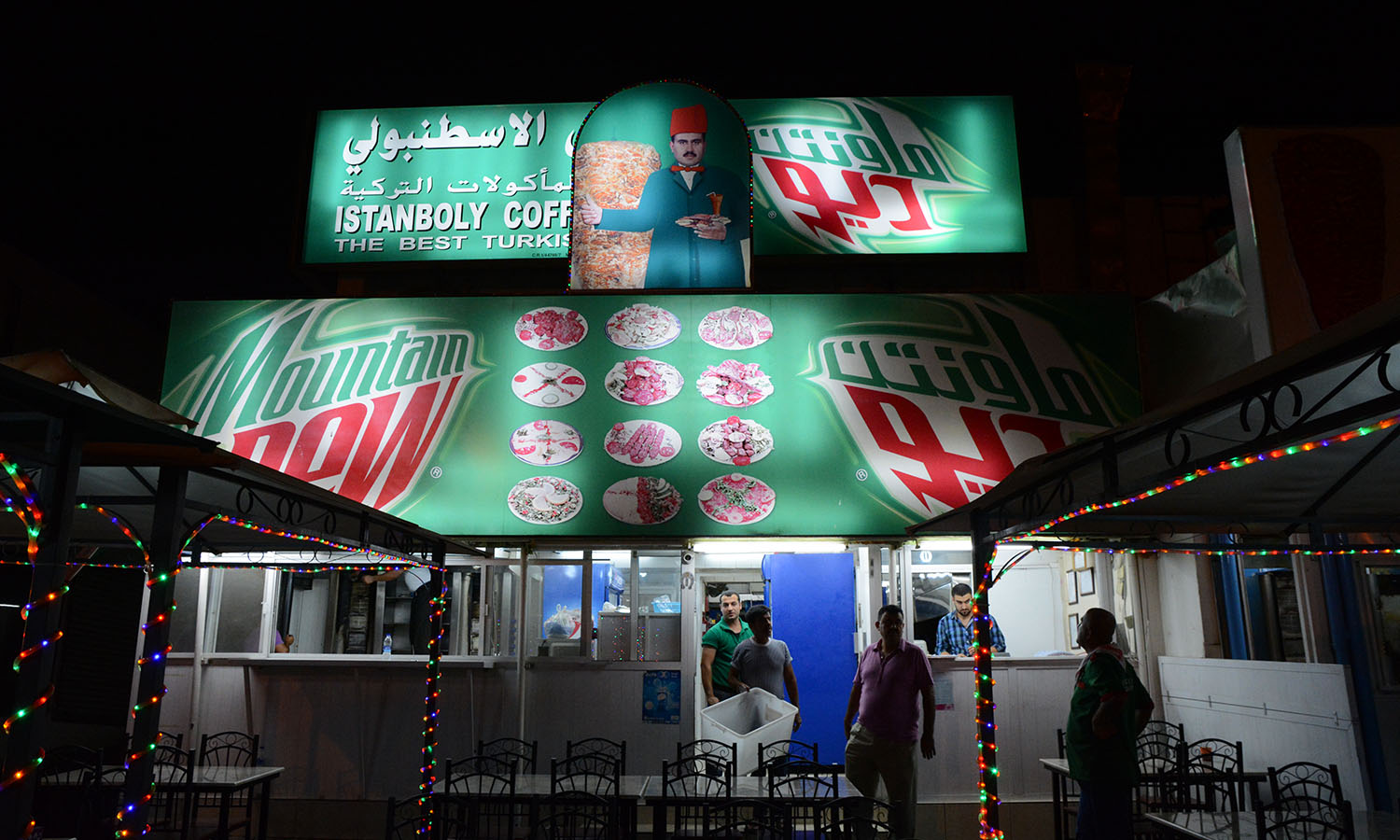
Omanis go gaga for shawarma (kebabs). Every local swears by their favourite shop, but those in the know make a beeline for Istanboly Coffee Shop when they’re after a late-night snack.
Pull up a chair outside and watch the cook carve meat from a hulking spit, doling out goodies to workers ferrying packages between the kitchen and cars. Go for a wrap, packed with tender strips of chicken, and if you’re feeling brave slather on mayo laced with enough garlic to ward off vampires for years to come. Make eyes with the neon Mr Istanboly sign as you munch – he’s giving you the thumbs up for your fine selection.
 (
(